Current Recipients
Jean Laney Harris Folk Heritage Award
2026 Recipients
Beckee Garris
Artist, Catawba Pottery and Basketry | Lancaster
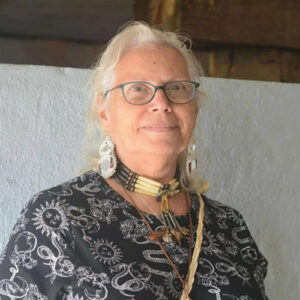
Beckee Garris was born and raised on the Catawba Indian Reservation in Rock Hill. She is the granddaughter of former Catawba Indian Chief Albert H. Sanders, Sr. and the great-granddaughter of former Chief Samuel T. Blue. S
he worked part-time for the Tribal Historic Preservation Office for the Catawba Indian Nation and part-time for the Native American Studies Center in Lancaster. She received her associate’s in arts degree in May 2017 through the Palmetto Program – University of South Carolina. She considers her greatest accomplishment in life is being the mother of 3, grandmother of 6 and great-grandmother of 4. She is a potter, basket maker who uses longleaf pine needles and other types of material, and traditional native storyteller. She served on the Catawba Language Committee to create a Catawba Dictionary syllabus in 2025. She was selected to be among 21 Native American storytellers to be part of the book “Trickster, A Native American Trickster Tales.” In 2012 this book earned the Aesop Award for Children’s Literature and has recently gone into its second printing. Her personal motto is: “If we don’t know where we come from, how do we know where we are going? And if we don’t know where we are going, how will we know if we get there?”
Photo by Mandy Catoe.
Tammy Leach
Artist, Beadwork | Neeses
 For a decade, Tammy Leach has served as the cultural preservationist for the Wassamasaw Tribe of Varnertown Indians. Dedicated to safeguarding tribal heritage, she integrates education, community engagement, and hands-on instruction to ensure the traditions of the Wassamasaw people flourish for future generations. Tammy’s expertise in traditional Native beadwork was solidified in 2005 through the SCAC’s apprenticeship program under Dr. William Goins. This mentorship deepened her mastery of the craft and the profound cultural meanings embedded within it. Since then, she has become an educator, sharing beadwork and tribal history with students and community members across the state. Her artistry and cultural interpretations have been featured at multiple S.C. institutions, including: the USC McKissick Museum, Native American Studies Center at USC Lancaster, the Berkeley County Museum, and Charles Towne Landing State Historic Site. Beyond gallery walls, Tammy is a frequent lecturer and demonstration artist, presenting at the Columbia Museum of Art and leading Native American Education Day programs. For five years, she has also hosted free monthly culture classes across Berkeley, Dorchester, and Charleston counties. Through these initiatives, Tammy fosters a deeper appreciation for Lowcountry Native heritage, ensuring the Wassamasaw Tribe’s vibrant legacy remains a living practice.
Laurel Horton
Advocacy, Quilting | Seneca
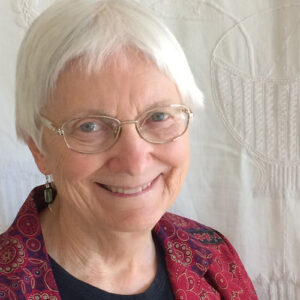 Laurel McKay Horton is an internationally recognized folklorist and quilt researcher whose work has shaped the modern understanding of American textile traditions. A Kentucky native, she holds degrees in English and library science from the University of Kentucky and a master’s in folklore from the University of North Carolina-Chapel Hill. Her 1979 thesis on regional quilt variations remains a foundational study in the field. Horton’s scholarship, notably her book Mary Black’s Family Quilts (2005), pioneered the study of historic quilts as “material behavior,” blending oral histories with archival research. In the mid-1980s, she collaborated with the University of South Carolina’s McKissick Museum to conduct one of the nation’s first state-wide quilt surveys, resulting in the influential exhibition and catalog, Social Fabric. A longtime leader within the American Quilt Study Group (AQSG), Horton served on its board and edited Uncoverings, the group’s annual research journal. Her contributions extend globally through her work with the British Quilt Study Group. Her career has been marked by prestigious milestones, including the 2023 Archer Taylor Invited Lecture and the 2024 AQSG keynote address. In 2025, she was inducted into the Quilters Hall of Fame. Beyond her research, Laurel has been a quilter since 1975 and a dedicated community organizer, co-founding both the Quilters of South Carolina and the Lake and Mountain Quilters Guild.
Artificial intelligence was used to edit and condense full-length bios.