Arts Directory
Ken Waldman
INDIVIDUAL - SCAD ID - #375
Contact
ken@kenwaldman.com
337-258-5994
www.kenwaldman.com
Alaska
Discipline
- • Literature
Geographical Availability
- Upstate
- Midlands
- PeeDee/ Grand Strand
- Lowcountry
- Western Piedmont
- Olde English
About
Artist Bio
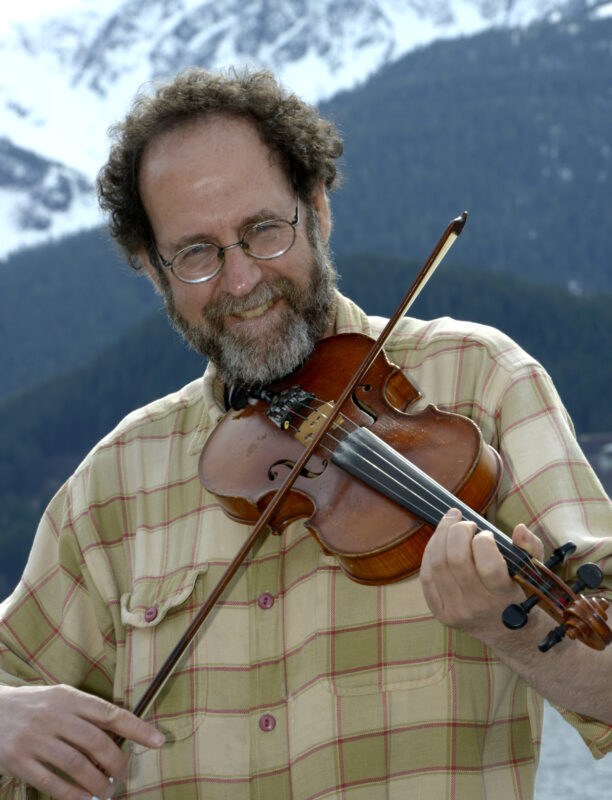
Ken Waldman is writer with 24 books, a fiddler and band leader with 12 CDs, and a performer and educator who appears in the widest range of venues for the widest range of audiences. Often touring as Alaska’s Fiddling Poet, he combines original poetry, old-time string-band music, and smart storytelling for a performance uniquely his. Since 1995 he’s appeared from the Kennedy Center Millennium Stage to the Dodge Poetry Festival to the Woodford Folk Festival (Queensland, Australia). A Duke University graduate, where he majored in Management Sciences, he’s a former college professor with a Creative Writing MFA from University of Alaska Fairbanks. Since 1995, he’s been a visiting writer at over 100 colleges (where he occasionally works with Music Departments and Honors Programs). He’s also visited over 260 schools in 35 states, and works with all ages, from pre-kindergartners to AP high-schoolers as well as with at-risk students.
His 24 books consist of 17 full-length poetry collections, 3 books for younger readers, a memoir, a creative writing manual, a short story collection, and a novel. 12 CDs include two for kids. Current projects include a collection of formal poems to be titled Formal Wear, a collection of selected Alaska-set poems, and a second memoir about Ken Waldman’s life as an artist. His 2020 hybrid creative writing manual, The Writing Party, is also part memoir of Ken’s work as a writer and teacher, and part full-length collection of poems about writers and writing. The book is a response to many requests for Ken to document his effective, unusual writing prompts.
Artist Statement
I began working in schools in 1990 as an assistant professor and one-person English Department at the Nome Campus of the University of Alaska Fairbanks. Nome is a community of 3,500 on the Bering Sea coast, and accessible only by plane. I taught mostly over telephone, and as part of my faculty service, I not only visited local schools each week, but when I traveled to villages to meet my college students, I’d visit the village schools where I’d play fiddle and share writing exercises. I developed ways to effectively connect with students of all ages, even where English was the second language.
Now, more than thirty-five years later, I’ve found what worked in rural Alaska has worked throughout the United States, whether in Title 1 or exclusive prep schools. Kids are kids. As one North Carolina middle school teacher remarked after a program, “Thank you for opening doors to writing, music, and Alaska in a manner that was easy for students to enter. Sometimes I worry that kids have given up on wonder. You proved me wrong.”
Every school visit, indeed every program, is going to be different. While I think I know how I can be better used, it’s not always for me to decide. An assembly in a gym or cafeteria is different than one in an actual theater, and both are different than day-long groups of 75 or 100, or visits to individual classes. And they’re different than half-day sessions with a select group of students.
What’s ideal? If asked to do a school-wide assembly, I hope it’s a prelude to visiting at least one smaller group in the school. I can only do so much in a single program for 300-700 students. Meeting afterwards leads to much deeper interactions. Similarly, if I’m asked to offer day-long sessions, one group after another, I ask if it’s possible to have a full assembly at the start of the day. It’s much more efficient to introduce myself to the whole group at one time instead of spending the first 5-10 minutes repeating a similar introduction for each group.
Every program is not only interactive, but students leave with handouts, which are poems on card stock (and invitations to additional lessons). One poem handout is bookmark width, and includes my mailing address. My promise: if a student or whole class writes me a letter, and they include their own return address, I promise to write back. Thus there’s an exercise in letter-writing. I’ll also pass along an age appropriate poem on card stock from one of my books. I’ll also pass along an acrostic poem I’ve written for their school and/or community. A teacher who’s paying attention will not only see the value of the poetry shared, and a lesson for additional student writing, but can teach how to format work on a computer as an alternative form of publishing.
As my own practice evolves, so does my teaching. The acrostic poems now have a life of their own.