Arts Directory
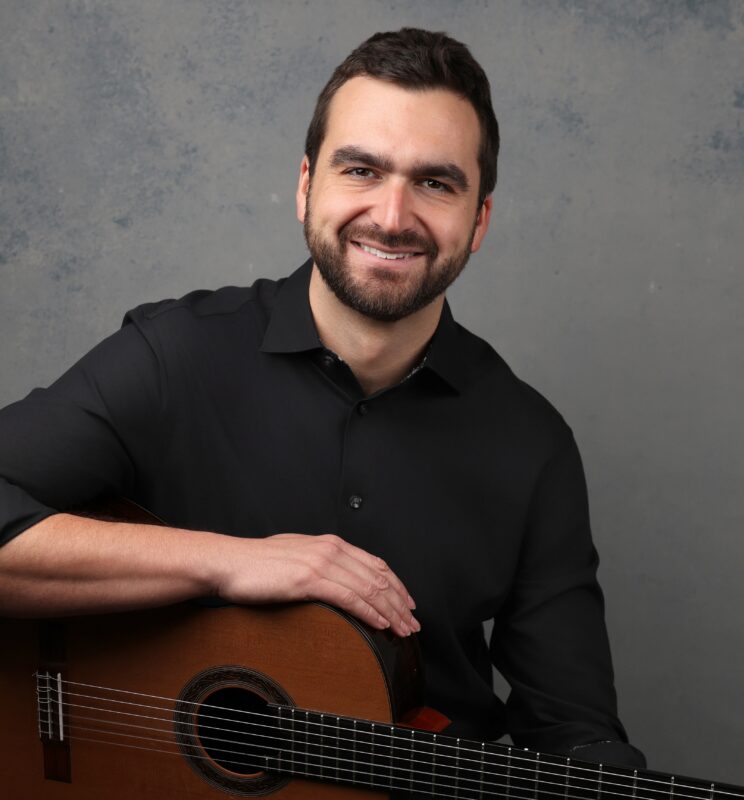
John Robert Culwell
INDIVIDUAL - SCAD ID - #505
Contact
jculwell97@gmail.com
864-314-7225
Anderson County, SC
Discipline
- • Music
Geographical Availability
- Upstate
- Midlands
- PeeDee/ Grand Strand
- Lowcountry
- Western Piedmont
- Olde English
About
Artist Bio
John Robert Culwell, D.M.A. is a classical guitarist, educator, and arts advocate based in Pendleton, South Carolina. Active as a soloist and collaborator throughout the Southeast, his work emphasizes accessible programming, interdisciplinary collaboration, and public engagement. His performances range from solo and chamber concerts to contemporary opera and new-music projects, with select engagements in New York City and Spain.
Dr. Culwell serves on the music faculty at Anderson University, where he teaches guitar and directs the Anderson University Guitar Ensemble, a mixed ensemble of university and high-school students that presents outreach performances for South Carolina public and private schools. He is the founder and director of the Anderson Guitar Society, which organizes free concerts, guest artist events, and monthly performance classes connecting students, teachers, and community members across the Upstate.
He holds a Doctor of Musical Arts in Guitar Performance from the University of Georgia, where his research focused on integrating aural-skills pedagogy into guitar performance and musicianship. His work is grounded in the belief that classical guitar is a living art form that thrives through connection, curiosity, and shared musical experience.
Artist Statement
As a classical guitarist, educator, and advocate for the arts in South Carolina, my work seeks to connect people through the expressive and unifying voice of the guitar. I view music not only as a source of enjoyment but as a vehicle for dialogue—between performer and listener, between tradition and innovation, and between academic and community spaces. My artistic mission is to cultivate musical experiences that are both intellectually grounded and emotionally resonant, inviting audiences and students to see classical guitar as a living, evolving art form.
My approach reflects on the past while also looking toward the future. I present the guitar’s rich history of intimate storytelling—shaped by more than 500 years of repertoire across cultures and traditions—while seeking ways to continually expand it through new collaborations, commissions, and arrangements. In practice, this perspective shapes programs that place standard repertoire alongside contemporary works, new arrangements, and collaborative projects, offering audiences a clear and engaging view of the instrument’s breadth.
Teaching is inseparable from my artistic practice. My work as a performer continually informs my pedagogy, and my teaching, in turn, deepens my artistic insight. My doctoral research, A New Approach to Reading for the Classical Guitar, reimagines aural skills pedagogy as a foundation for developing sight-reading and fretboard fluency. Through this approach, guitar students learn to hear music, understand it deeply, and perform with greater clarity and confidence. I believe effective music education understands that technical mastery, creativity, and intellectual curiosity go hand in hand.
Community engagement stands at the heart of my work. As founder and director of the Anderson Guitar Society, I work alongside students, teachers, and community members to support a growing network of university students, high school guitarists, and local musicians through monthly performance classes, guest artist recitals, and collaborative chamber concerts. This initiative has become a meaningful pathway for musical growth and public engagement in the Upstate region. By creating accessible spaces for shared performance and mentorship, I aim to help ensure that the arts remain vibrant, inclusive, and deeply connected to the people they serve.
Ultimately, my work as an artist and educator is grounded in the belief that music, like all art, is a transformative force. Through performance, teaching, and community leadership, I strive to make classical guitar not a museum piece but a living art—one that invites curiosity, shared musical experience, a commitment to quality, and sustained engagement from those who encounter it.